
Do Not Attempt to Remove a European Wasp Nest
European wasps are aggressive and unpredictable. Disturbing a nest can trigger a swarm attack and result in multiple stings within seconds. If you suspect a European wasp nest on your property, do not attempt DIY removal. Professional treatment is the only safe option.
Call now or book online for professional European wasp removal.
European wasps are one of the most dangerous stinging pests found around New Zealand homes and businesses. While they may look similar to bees or native wasps, their behaviour is very different — and far more aggressive.
If you’re seeing black and yellow wasps repeatedly hovering around food, rubbish bins, decks or outdoor dining areas, there’s a strong chance a European wasp nest is nearby. Left untreated, nests grow rapidly and the risk to people, pets and visitors increases.
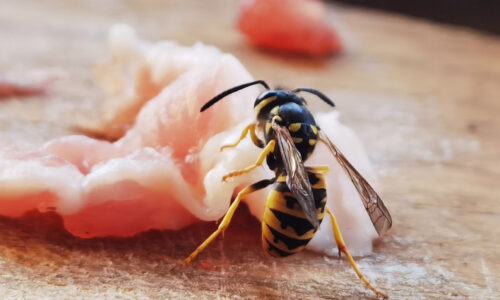
What Are European Wasps?
European wasps (Vespula germanica) are an invasive pest species introduced to New Zealand in the 1940s. Since then, they have become firmly established across much of the country, particularly in warmer regions and urban environments.
New Zealand’s climate allows European wasp nests to survive longer than in their native range. In some cases, nests can persist across seasons, growing larger and more aggressive over time.
Why European Wasps Are Dangerous
Unlike bees, European wasps can sting multiple times without dying. When a nest is disturbed, wasps release alarm chemicals that signal others to attack. This often results in multiple wasps stinging repeatedly, commonly targeting the face, neck and upper body.
European wasps are especially dangerous around:
- Children and pets
- Outdoor dining and BBQ areas
- Schools, childcare centres and workplaces
- Public parks and recreational areas
For some people, a sting causes pain and swelling. For others, particularly those with allergies, stings can be life-threatening. Multiple stings can be dangerous even without a known allergy.
If someone experiences difficulty breathing, swelling of the face or throat, dizziness or collapse after a sting, call emergency services immediately.
How to Identify European Wasps
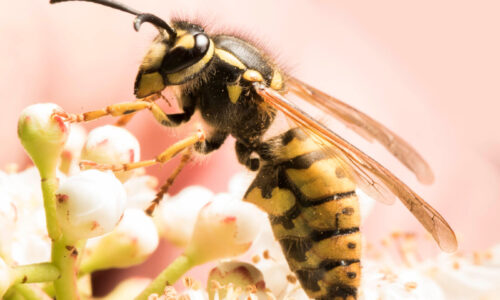
European wasps are often mistaken for bees, but there are clear differences. They have a smooth, less hairy body with bright yellow and black bands and distinctive black markings. Their legs are yellow, and their wings fold neatly against the body when resting.
Behaviour is often the biggest clue. European wasps are persistent, fast-moving and aggressive, especially around food. Correct identification matters — treating the wrong species can make the situation worse.
Not sure what you’re dealing with? Call now for professional identification.
Where European Wasps Build Nests
European wasps prefer hidden, protected locations. In New Zealand, nests are commonly found:
- Underground in soil or banks
- Inside wall cavities and roof spaces
- In sheds, garages and eaves
- Behind retaining walls or outdoor furniture
- In tree hollows
Nests are made from chewed wood pulp and saliva, forming grey papery structures that can house thousands of wasps.
If you’ve located a nest, keep your distance and call a professional immediately.
Why European Wasp Numbers Increase Quickly
European wasps thrive in environments where food is readily available. Outdoor eating areas, uncovered rubbish bins, compost, fallen fruit and pet food all attract wasps.
Once a nest is established, populations can grow rapidly. The longer a nest is left untreated, the more aggressive and dangerous the colony becomes.
Should You Remove a European Wasp Nest Yourself?
No. DIY European wasp removal is extremely dangerous.
Disturbing a nest without professional equipment can trigger swarm attacks within seconds. Store-bought sprays rarely eliminate the entire nest and often leave the colony active and more aggressive than before.
Incomplete removal allows the nest to rebuild, putting you and others at ongoing risk.
Professional removal is the only safe and effective solution.
Where European Wasps Are Found in New Zealand
European wasps are well established across much of New Zealand, particularly in warmer regions and areas where food sources are readily available. If you live in one of the regions below and are seeing repeated wasp activity, there is a strong likelihood a nest is nearby.
North Island
European wasps are widespread across the North Island, especially in urban and semi-urban environments where outdoor dining, rubbish bins and gardens provide easy access to food.
They are commonly found in:
- Auckland, particularly suburban areas, parks and outdoor entertaining spaces
- Waikato, including rural–residential properties, farms and sheds
- Bay of Plenty, where warm conditions and fruit-growing areas attract wasps
- Hawke’s Bay, especially around vineyards, orchards and dry environments
- Wellington, particularly in suburban areas, reserves and coastal zones
South Island
European wasps are more concentrated in specific South Island regions, but in those areas they can be extremely aggressive and persistent.
High-risk regions include:
- Nelson–Tasman, one of the most heavily affected areas in New Zealand
- Marlborough, where dry conditions and vineyards support large nests
- Canterbury, particularly around Christchurch suburbs and rural properties
- Otago, where wasps are present in warmer inland and urban areas
European wasps are less common in colder, high-altitude regions, but they can establish anywhere conditions allow. Seeing repeated wasp activity is often the first sign a nest is already well established.
If you’re located in any of the areas above and noticing aggressive wasps around food, rubbish or outdoor areas, early professional treatment is critical. The longer a nest is left untreated, the larger and more dangerous it becomes.
Call now or book online for professional European wasp removal in your area.
Professional European Wasp Removal: How It Works
Professional pest control technicians use specialised techniques designed specifically for European wasps. This includes safely locating nests, assessing risks, applying professional-grade treatments and ensuring the nest is fully destroyed.
This approach protects people and pets while reducing the chance of future infestations.
Speak to a technician today — click to call.
When You Should Act Immediately
You should book professional European wasp removal urgently if:
- A nest is near entrances, decks or outdoor living areas
- Wasps are behaving aggressively
- Someone on the property has a sting allergy
- Wasp numbers are increasing day by day
Call now for priority European wasp removal.
Get Professional European Wasp Removal Today
European wasps are not a problem to ignore or manage yourself. Fast, professional treatment reduces the risk of stings, swarm attacks and recurring infestations.
- Safe, professional nest removal
- Experienced technicians
- Targeted treatments
- Clear safety guidance
Call now or book online for professional European wasp removal.
Enjoyed this article?
If you found this article helpful, sign up for our free Quarterly Newsletter to receive all our tips and tricks on pest control and disinfection.
Sign Me Up!